Stamped patios, driveways, slabs, sidewalks, and sealing across College Station and Bryan, all built on a base prepared for ground that swells when it rains and shrinks when it doesn't.
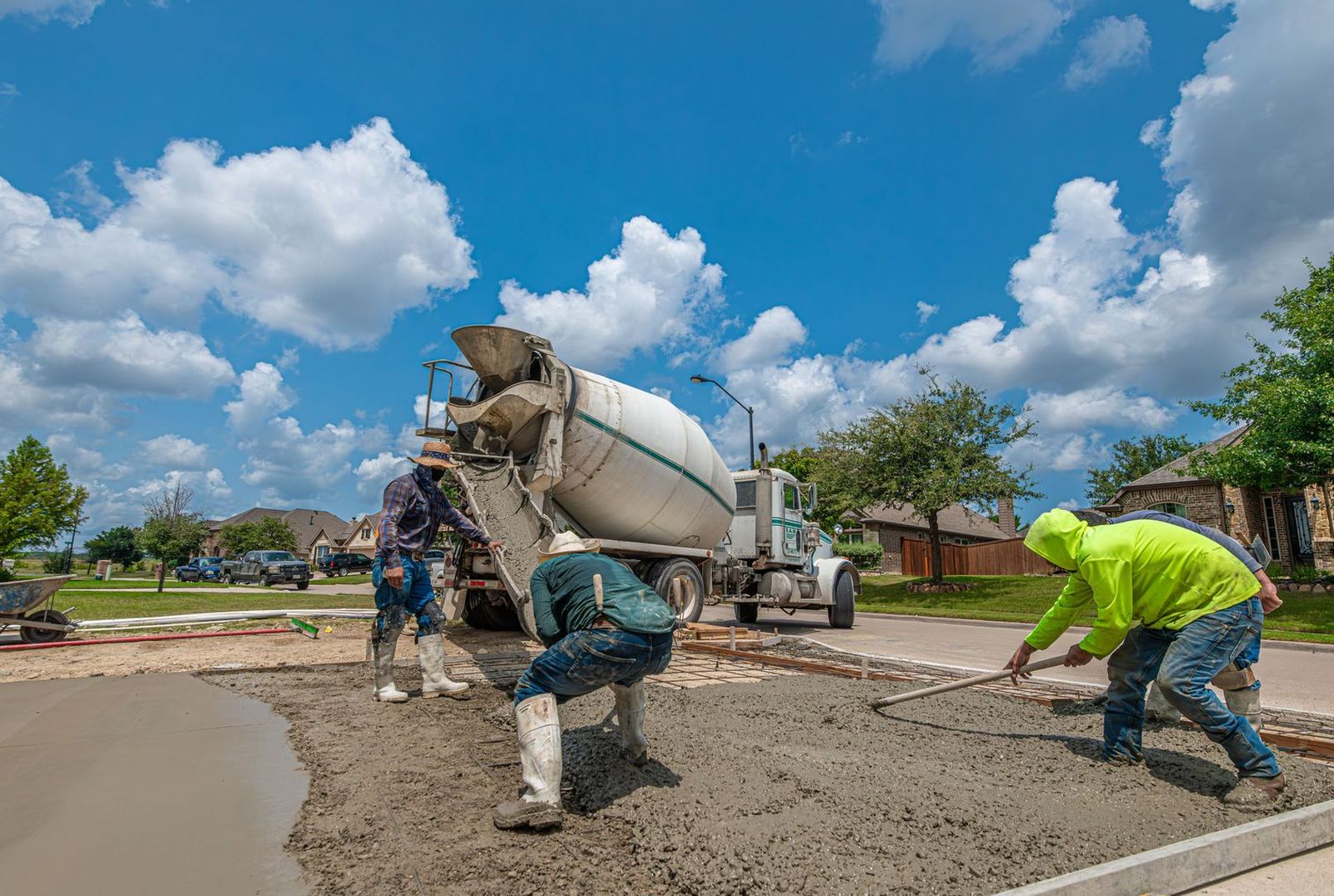
We measure and check the soil before we give you a number.
Patterns, color, and sealer for patios, walks, and pool decks.
Plus Wellborn, Kurten, Millican, and the rest of Brazos County.
Around here, concrete usually fails because of what's under it. Every job starts with the soil, the base, and where the water goes, whether the finish is broom or a slate stamp.
Slate, flagstone, cobble, and wood-plank patterns with integral or cast-on color, finished with a sealer that suits the Texas sun.
New patios, extensions to the builder's slab, porch and entry slabs, and pads for outdoor kitchens, poured to drain away from the house.
New and replacement driveways, widening, extra parking pads, and approaches to the street, built on a base that won't settle under them.
Shop and garage slabs, additions, carports, and equipment pads, sized and reinforced for what sits on them.
Resealing faded stamped concrete, acid- and water-based stains, and clear sealers for driveways, walks, and pool decks.
New walks, replacement of lifted or sunken sections, and trip-hazard repair where roots and clay have moved the concrete.
Parking lots, dumpster pads, ADA ramps, curbing, and sidewalk repair for businesses and property managers, scheduled around move-in weeks and game days.
The ground around Bryan and College Station moves more than most. Good prep accounts for that before any concrete arrives.
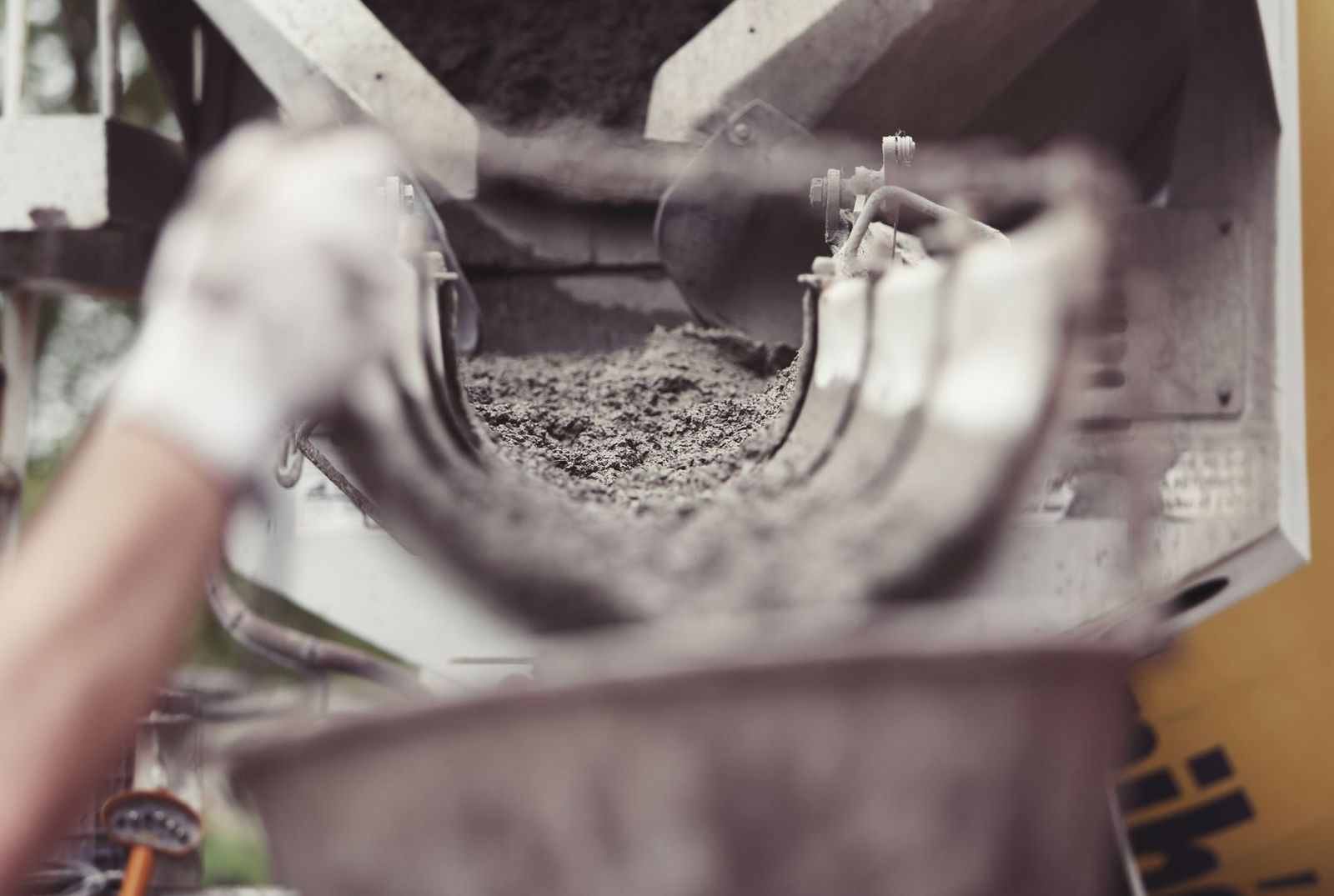
Much of Bryan and College Station sits on clay. After a wet spell, it swells and lifts, and after a dry summer, it shrinks and opens cracks you can put a finger in. Concrete poured straight onto it moves with it. Select fill, proper compaction, and the right moisture at pour time keep that movement out of the slab.
Older neighborhoods like College Hills, Southside, and Southwood Valley have mature oaks with roots that run shallow and wide. They lift walks and driveway edges, and in dry months, they pull water out of the clay, so the ground drops. Both have to be planned for, not patched later.
College Station is flat, and heavy storms drop a lot of rain fast. Without enough fall, a patio holds water against the house, and a driveway sends runoff toward the garage. Slope gets set before the pour, not argued about afterward.
A July pour sets fast enough to crack if timing and curing are off, and a February freeze like 2021's finds every weak surface. Early starts, curing compound, and joints cut on time handle both.
Four steps, and you know the price before anything gets torn out.
On site, measured, with a look at the soil, the drainage, and how a truck gets in. Estimates are free, and we don't quote sight unseen.
Square footage, base prep, thickness, reinforcement, finish, and sealer, all itemized. If the ground needs work, that's in the quote instead of added later.
Demo and haul-off if there's an old slab, then base, forms, steel, and a pour scheduled around the weather.
The finish or stamp you picked, control joints cut on time, and clear instructions on when you can walk on it, park on it, and seal it.
No. We come out, measure, look at the soil and where the water drains, and check how a truck gets to the pour. It usually takes about twenty minutes, it is free, and there is no obligation.
Concrete is priced by the square foot, but base prep, thickness, reinforcement, finish, and access move the number more than size does. Stamped and colored work costs more than a broom finish because of the extra labor and sealer. We will not quote a job we have not seen, but we will itemize every line so you can compare our bid against anyone else's.
Clay that swells and shrinks is the main reason concrete fails in Bryan and College Station, so it has to be planned for. Removing the soft top layer, bringing in select fill, compacting it properly, and pouring at the right moisture keep most of that movement out of the slab. Control joints then decide where any remaining cracks go.
Foot traffic in about a day and cars in about seven. Stamped and sealed surfaces need a little longer before furniture goes back on. We will give you the exact timing for your pour.
No. Texas does not issue a state license for concrete or general contracting, so a "licensed concrete contractor" claim does not mean much here. What matters locally is permitting: some work, such as a driveway approach in the city right-of-way, needs a permit from the City of College Station or the City of Bryan. Ask every bidder who pulls the permit, and ask for a certificate of insurance either way.
Yes. Bryan is as much a part of our work as College Station, from the older neighborhoods near downtown to Miramont and Austin's Colony. There is no extra charge for a Bryan address.
College Station, Bryan, and the Brazos County communities around them. There are details for each on the service areas page, and a dedicated page for concrete work in Bryan.
We're a concrete crew working across Bryan and College Station for homeowners, landlords, builders, and businesses. A lot of our work is stamped patios and driveways, and a lot of it comes from people who saw a job we poured down the street.
We'd rather talk you out of a job than pour something that won't last. If the clay needs more prep than the budget allows, or the drainage has to be solved first, we'll say so at the estimate.
Doing some reading before you get quotes? The Concrete Network's stamped concrete guide is a good overview of patterns and color, and the NRMCA's Concrete in Practice series explains curing and cracking in plain language.
Tell us roughly what you have in mind, and we'll come measure it. Or skip the form and call (979) 977-1480.
We answer estimate requests the same day during the week. Nothing gets shared with anyone else.
